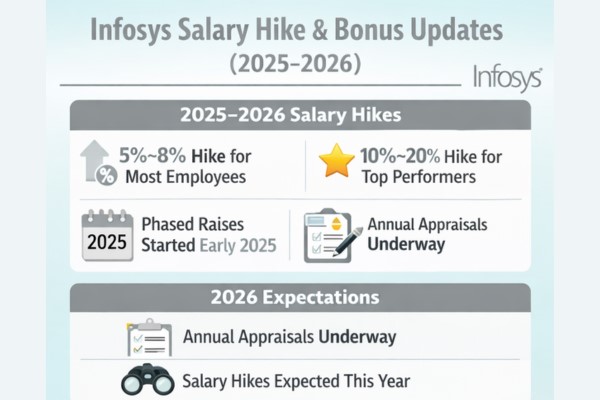
Introduction: Infosys Salary Hikes
Infosys is one of India’s most respected and influential information technology services companies. Over the decades, it has been known not only for pioneering IT services and digital transformation across the world but also for setting industry benchmarks with its employee policies, workplace culture, and compensation structures. One of the most discussed aspects among both current and prospective employees is Infosys salary hikes — how they have evolved over time, what factors influence them, what the recent trends are, and what employees can expect at different stages of their careers.
In this comprehensive article, we will dive deep into the history of Infosys salary hikes, how they compare with industry standards, detailed timelines, table formats for clarity, leadership perspectives, employee impacts, and common questions people ask about salary progression at Infosys. This article is designed to be thorough, informational, and a valuable resource for understanding how compensation has evolved at one of India’s largest IT firms.
Table of Contents
Understanding Salary Hikes at Infosys
Before delving into history, it’s important to clarify what a salary hike means in the context of an IT services company like Infosys.
A salary hike refers to an increase in an employee’s compensation package, which may include basic pay, allowances, performance incentives, and benefits. In Infosys, like most large organizations, salary hikes can come in different forms:
- Annual Performance-Based Increments: Typically part of the yearly appraisal cycle.
- Special or Mid-Year Adjustments: Occasionally offered to retain talent or adjust for market conditions.
- Promotion-Linked Increases: When an employee moves to a higher role or grade.
- Retention Bonuses or Offers: Higher compensation offered to high performers or to counter external offers.
The salary hike percentages and frequency have varied through the years, influenced by the company’s financial performance, industry trends, talent demands, economic cycles, and strategic shifts.
The Historical Journey of Infosys Salary Hikes
The history of salary hikes at Infosys mirrors its own growth — from a small startup in the 1980s to a global IT powerhouse with hundreds of thousands of employees. Each era in the company’s history brought different salary philosophies, structures, and increments.
Early Years: 1981 to 1999 — Building Foundations
Infosys was founded in 1981 by seven engineers including N.R. Narayana Murthy and Nandan Nilekani. In its early years, the focus was on establishing credibility, winning client trust, and building a sustainable business model. During this period, salary structures were modest by today’s standards. Compensation was competitive for Indian IT at that time, but annual hikes were lean, typically ranging from 5% to 10%.
Infosys was a pioneer in performance evaluations which were introduced early on. Even though hikes were modest, they were tied strictly to performance — setting the foundation for meritocratic culture.
Growth Momentum: 2000 to 2007 — Riding the IT Wave
The 2000s saw exponential growth in global IT outsourcing and Infosys was one of the key beneficiaries. Revenue surged, new geographies opened, and hiring scaled rapidly. The rapid expansion meant that Infosys started offering higher hikes to attract and retain talent.
Annual hikes during this decade improved. On average, most employees would see:
- 12% to 15% annual increments for strong performers.
- 8% to 12% for average performers.
- Exceptional performers sometimes saw 18% or higher increments.
This period also saw the introduction of variable pay components tied to project performance, client satisfaction, and company profitability.
The Financial Crisis and Its Aftermath: 2008–2012
The global economic slowdown in 2008 affected IT spending worldwide. Infosys experienced slower growth compared to the preceding boom years. In response, salary hikes were conservative.
During this period:
- Annual hikes were usually 8% to 12%.
- Special increments were rare.
- Promotions and grade-based increases were more commonly used to incentivize high performers.
Infosys placed emphasis on operational efficiency, internal training, and career development — sometimes offsetting smaller hikes with other employee benefits.
Emergence of Digital Services: 2013–2017
As IT shifted from traditional application development to digital transformation, data analytics, cloud computing, and automation, Infosys invested heavily in upskilling employees through programs like Infosys Global Education Center and its own digital learning platforms.
Salary hikes started reflecting:
- The company’s transformation agenda.
- Need for digital-skilled talent.
- Competitive war for talent among peers.
During this period:
- Performance-linked hikes ranged from 10% to 18%.
- High-performing digital talent (cloud, automation, AI, analytics) often commanded higher hikes, sometimes even crossing 20% during promotions.
- Mid-management roles saw significant re-banding with corresponding compensation adjustments.
Recent Years: 2018 to Present — Competitive, Market-Informed, and Strategic
Infosys in recent times has emphasized on both performance and market competitiveness. The company adjusted compensation policies to attract the best in digital services, enhance retention, and stay competitive relative to global IT firms.
Some key trends in recent salary hikes include:
- Salaries aligning more closely with market benchmarks from peers like TCS, Wipro, HCL Technologies, and international consultancies.
- Increase in market-based adjustments rather than standardized hikes.
- Recognition of skill-based premium hikes for in-demand technologies.
- Continued focus on performance-based increments rather than across-the-board raises.
While Infosys does not publicly disclose individual salary hike percentages, industry reports and employee-level data show the following general band:
- Average annual hike: 10% to 15%
- Top performers: 15% to 25%+
- Promotions: often come with 20%+ increases depending on role and business impact
Salary Increase Timeline at Infosys
Below is a clear timeline summarizing how salary hikes have evolved at Infosys over time. While exact percentages may vary based on role, performance, and market conditions, the table provides a representative view.
| Period | Average Annual Hike | Top Performer Hike Range | Key Notes |
|---|---|---|---|
| 1981–1999 | 5%–10% | Up to 12% | Early growth, merit focus |
| 2000–2007 | 12%–15% | 15%–18% | IT boom, rapid expansion |
| 2008–2012 | 8%–12% | 12%–15% | Post-financial crisis conservatism |
| 2013–2017 | 10%–15% | 18%–20%+ | Digital transformation era |
| 2018–2023 | 10%–15% | 15%–25%+ | Market competitiveness & skill premiums |
| 2024–Present | 10%–16% | 15%–25%+ | Strategic salary adjustments |
Note: These figures are based on industry data, employee reports, and general trends. Actual hikes can vary by performance rating, role, location, and business unit.
What Drives Salary Hikes at Infosys?
Understanding salary hike percentages becomes meaningful when we know the drivers behind them. At Infosys, salary hikes are influenced by several factors, including but not limited to:
1. Performance Ratings
Performance appraisal is a core element of how hikes are decided. Infosys uses a rating system where employees are evaluated against objectives, project contributions, client feedback, and competencies. Higher ratings typically result in higher salary bumps.
2. Market Benchmarks
Infosys regularly compares its compensation structure with competitors in India and globally. Especially for in-demand skills such as cloud computing, AI, cybersecurity, and data analytics, Infosys ensures salary offers are competitive to both attract and retain talent.
3. Role & Responsibilities
Employees moving into managerial, leadership, or highly specialized roles often receive larger compensation adjustments, reflecting increased job scope, leadership expectations, and business impact.
4. Critical Skill Demand
Technical skills that are scarce or in high demand can attract better hikes. For example, employees with expertise in AI, machine learning, blockchain, or hyperscale cloud services are sometimes compensated at a premium.
5. Business Unit Performance
Project profitability and client satisfaction can also influence compensation. Teams delivering strong results often have higher budgets for hikes or performance incentives.
6. Geographical Considerations
Infosys operates globally, and salary structures reflect cost of living, competitive market rates, and regulations in different regions.
How Infosys Salary Hikes Are Implemented
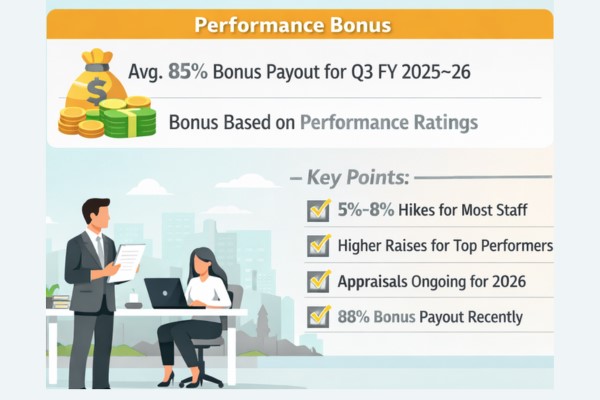
The implementation of salary hikes typically follows a structured process. While the exact details may evolve, a general model includes:
1. Annual Appraisal Cycle
Every year, usually tied to a financial quarter, employees go through a performance review. Feedback, achievements, and goal completion are analyzed to arrive at ratings.
2. Calibration
Ratings are reviewed across teams to ensure fairness, consistency, and elimination of bias. Calibration committees approve final ratings and corresponding compensation recommendations.
3. Offer of Hike
Employees receive formal communication detailing their new CTC (Cost to Company), hike percentage, revised basic pay, and any new benefits.
4. Effective Date
Typically, hikes become effective in the new financial year or as stated in the hike communication.
Typical Salary Hikes at Different Career Stages
Entry-Level / Freshers
Freshers usually start with salaries aligned to industry entry standards. Initial hikes may be modest in the first one to two years. Once they gain experience, hikes become more pronounced.
Mid-Level Professionals
Employees in their third to tenth year often see significant hikes, especially when they transition from technical roles to lead or managerial positions.
Senior and Leadership Roles
For senior leaders, hikes are tied closely to strategic impact, team performance, and business delivery outcomes. Increments at these levels are less standardized and more performance-driven.
How Infosys Stacks Up Against Competitors
When talking about salary hikes, it’s natural to compare with other major IT firms in India such as Tata Consultancy Services (TCS), Wipro, HCL Technologies, and international consultancies like Accenture and Deloitte.
Here’s a general industry comparison:
- Infosys, like its peers, follows a performance-linkage model rather than blanket increases.
- Certain niche skills attract higher premiums across all firms, not just Infosys.
- Compared to some peers, Infosys has been known for structured appraisal processes and calibrated hikes.
- Market adjustments have become more common across the industry, and Infosys is aligned with this trend.
Common Misconceptions About Salary Hikes at Infosys
There are several myths that sometimes circulate about salary hikes at Infosys. Let’s clarify a few:
Myth 1: Infosys Only Gives Low Hikes
This is outdated. While hikes were conservative during economic downturns, current hikes reflect market trends and skill demands.
Myth 2: Hikes Are the Same for Everyone
Not true. Hikes are performance and role-based, and high performers do see sizeable increases.
Myth 3: Promotions Always Come With High Hikes
Promotions often come with higher compensation, but the exact percentage depends on role, business impact, and market comparisons.
Stories From Employees (Voice of Experience)
Over the years, many employees have shared their perspectives on salary growth at Infosys:
- Some praise the transparent performance appraisal system.
- Others highlight the focus on continuous learning which often underpins long-term career growth.
- Many digital-skilled professionals report larger hikes due to high demand.
These anecdotal experiences provide context to the numbers — showing that career progression at Infosys is a blend of performance, skill development, and opportunity.
Preparing for Your Next Salary Hike at Infosys
If you are an employee or a candidate evaluating your compensation prospects at Infosys, here are key areas to focus on:
1. Performance Excellence
Consistently delivering quality work is the foundation for higher hikes.
2. Skill Enhancement
Upskilling in market-relevant technologies can improve negotiation power and hike potential.
3. Networking and Visibility
Contribution to cross-functional projects and visibility with leadership often help during appraisal calibrations.
4. Understanding Market Trends
Knowing current salary benchmarks helps in realistic expectations and negotiation.
FAQs About Infosys Salary Hikes
Q1: How frequently does Infosys give salary hikes?
A: Infosys typically conducts annual salary hikes tied to its performance appraisal cycle. Additionally, promotions and special adjustments may occur at other times.
Q2: Do all employees receive the same hike percentage?
A: No, hikes vary based on individual performance ratings, role changes, market benchmarks, and skill demand.
Q3: Are salary hikes at Infosys better than in other IT firms?
A: This depends on the role, skill set, and performance. Infosys is competitive with industry peers, though individual experiences vary.
Q4: Do freshers get significant hikes?
A: Freshers may get modest hikes in early years, with larger hikes typically coming as experience and impact grow.
Q5: Can salary be negotiated outside the annual hike cycle?
A: On promotions or in special retention cases, compensation may be adjusted outside of the routine cycle.
Conclusion
Infosys salary hikes have evolved significantly over the decades — from modest increments in its early years to competitive, performance-linked, market-aware adjustments today. Understanding this history helps employees and job seekers appreciate how compensation moves in response to business needs, skill demands, performance standards, and broader economic conditions.
This article presented a detailed timeline, contextual factors, implementation practices, comparisons, and practical insights. Whether you are preparing for your next appraisal, evaluating a job offer, or simply curious about how salary progression works at one of India’s leading IT giants, the Infosys salary hikes journey offers valuable lessons about compensation, career growth, and the value of continuous performance.