
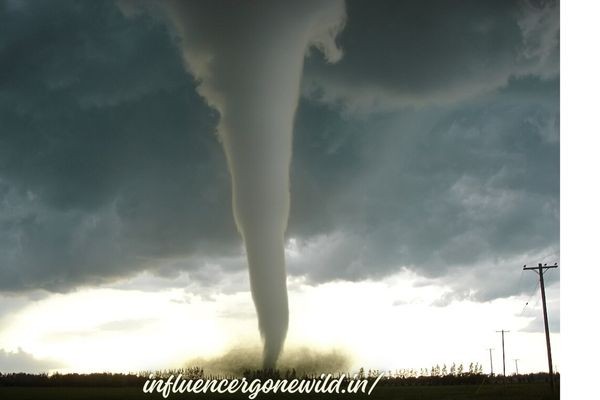
If you’ve ever watched a storm roll in and felt that strange mix of curiosity and fear, you’ll know exactly why tornadoes fascinate so many of us. They’re like nature’s wild card — unpredictable, powerful, and capable of turning a calm afternoon into a scene straight out of a disaster movie.
But tornadoes aren’t just some Hollywood-style spectacle. They’re real, sudden, and often terrifying forces of nature. And if you’ve ever found yourself hearing the rumble of thunder while wondering, “Could a tornado happen here?” — trust me, you’re not alone.
Today, I want to walk you through everything you need to know about tornadoes — how they form, what they look like, what they feel like, and how you can stay safe when the sky decides to spin itself into a frenzy. Think of this as the tornado survival guide you always wished someone explained in simple, everyday language.
So grab a coffee, pull up a chair, and let’s chat about one of the most mesmerizing (and nerve-wracking) natural events on Earth.
Table of Contents
What Exactly Is a Tornado?
The simplest way to put it?
A tornado is a violently rotating column of air that stretches from a thunderstorm down to the ground.
But honestly, that definition barely scratches the surface. A tornado isn’t just “air spinning fast.” It’s more like the atmosphere gets caught up in its own dance routine — one that nobody asked for — and suddenly decides to spin so violently that it pulls dust, debris, objects, and sometimes even entire buildings into its chaotic swirl.
If you’ve ever seen video footage, tornadoes can look like:
- A thin rope twisting in the sky
- A fat column, almost like a dark pillar
- A huge wedge that looks less like a tornado and more like a moving wall
They’re unpredictable, shifting their shape and size like a moody teenager trying on different outfits.
How Tornadoes Form (In the Most Non-Scientific, Human Way Possible)
Most of us didn’t show up to science class to become meteorologists, so let’s keep this simple.
Tornadoes usually form during strong thunderstorms, especially supercells — the kinds with swirling updrafts known as mesocyclones. Imagine hot air rising like it’s late for a job interview, and cold air rushing in like it’s trying to stop it at the door. When these two collide and start spinning horizontally, wind patterns can tilt that spinning air vertically.
It’s kinda like twisting open a bottle cap… except the earth is the bottle, and the atmosphere is doing all the twisting.
Before you know it, that spinning air tightens into a funnel. And if it touches the ground — boom, you’ve got yourself a tornado.
It’s wild, isn’t it?
The entire thing depends on temperature, moisture, wind direction, timing, and just a dash of atmospheric mischief.
Tornado Alley: Where These Monsters Prefer to Hang Out
Even if you’re not from the U.S., you’ve probably heard of Tornado Alley — that infamous region where tornadoes seem to drop in like uninvited guests.
This region includes:
- Texas
- Oklahoma
- Kansas
- Nebraska
- South Dakota
- Parts of Colorado
If the United States were a tornado magnet, Tornado Alley would be the refrigerator door where all the storms stick.
But here’s a twist: recent weather patterns show that tornado activity is slowly shifting eastward into states like:
- Mississippi
- Alabama
- Tennessee
- Arkansas
Mother Nature has basically decided to redraw the map.
The EF Scale: How We Measure Tornado Strength
You’ve probably heard people talk about EF1, EF2, or EF5 storms. The Enhanced Fujita (EF) Scale is how meteorologists measure a tornado’s intensity based on the damage it causes.
Here’s the quick breakdown:
| EF Rating | Wind Speed | Damage Level |
|---|---|---|
| EF0 | 65–85 mph | Small damage — shingles, branches |
| EF1 | 86–110 mph | Moderate damage — roofs, mobile homes |
| EF2 | 111–135 mph | Considerable damage — large trees, weak structures |
| EF3 | 136–165 mph | Severe damage — strong homes destroyed |
| EF4 | 166–200 mph | Devastating damage — well-built homes leveled |
| EF5 | 200+ mph | Incredible damage — nothing left but foundation |
EF5 tornadoes are the real nightmare fuel. These are the ones that can toss cars like toys and peel entire houses off the ground as if the earth is giving itself a reset button.
What It Feels Like When a Tornado Is Near
I’ve never been inside a tornado (thankfully), but I did live in an area where tornado sirens were as normal as school bells.
Let me tell you… when those sirens go off? Your heart skips a beat.
The air feels different.
Heavy.
Still.
Almost like the world holds its breath.
People who have been in a tornado often describe:
A Roaring Noise
Some say it sounds like a freight train.
Others say it’s like standing too close to an airplane engine.
Either way, it’s a sound you never forget.
Pressure Changes
Your ears might pop, just like when you’re in an airplane.
Darkness
Tornadoes can drag so much dirt and debris into the air that the sky goes from gray to pitch black.
That Gut Feeling
You know that feeling in your stomach when something bad is about to happen?
Multiply that by ten.
This is why tornado warnings are taken so seriously — because once you feel a tornado, you’re already too close.
Common Tornado Myths (That You Should Forget Immediately)
People love passing down tornado “advice” like family recipes. But just because your great-uncle said something doesn’t mean it’s true.
Let’s bust some myths, shall we?
Myth #1: Tornadoes Never Hit Cities
Tell that to Oklahoma City, Nashville, and St. Louis. Tornadoes don’t check Google Maps.
Myth #2: You Should Open Windows
Please don’t. This doesn’t “equalize pressure.” It only gives the tornado an easier way inside.
Myth #3: Tornadoes Avoid Highways
Actually, video footage often shows tornadoes crossing them like they’re walking paths.
Myth #4: Hiding Under an Overpass Is Safe
It’s actually one of the worst places — the wind can intensify there like wind through a funnel.
How to Stay Safe During a Tornado

If you ever hear a tornado warning, don’t hesitate. Time is everything.
Here are the basics:
Get Low
Basement or storm shelter = best option.
If not, lowest floor of your building.
Get Away From Windows
Flying glass is one of the most common injury causes.
Use the “Small and Sturdy” Rule
Find a small room with strong walls — bathrooms, closets, hallways.
Cover Yourself
Use a mattress, blanket, helmet, anything that protects your head.
If You’re Outside
Find a ditch and lie flat.
Not heroic, not glamorous — but it can save your life.
If You’re in a Car
Drive away at right angles only if the tornado is far away.
If it’s close? Leave the car. It is not safe.
Signs a Tornado May Be Coming
Mother Nature is dramatic, and she gives clues:
- Greenish tint in the sky
- Sudden silence after intense wind
- Rapidly rotating clouds
- Hail without rain
- A funnel cloud forming
- A loud roar
If several of these happen at once, don’t wait for confirmation — get to shelter.
Why Tornadoes Are Becoming More Common
As much as we love to debate it, climate patterns are changing. Warmer air, shifting wind patterns, and changes in moisture levels have made conditions more favorable for tornado formation.
Some experts believe the tornado “season” is stretching longer than it used to.
It feels like the weather has been acting up more often lately — and tornadoes are part of that trend.
The Strongest Tornadoes Ever Recorded
Let’s quickly walk through some jaw-dropping tornadoes that left their mark on history:
Tri-State Tornado (1925)
The deadliest in U.S. history — 219 miles of destruction.
Oklahoma City (1999)
Winds reached 318 mph. That doesn’t just break records — it shatters them.
Joplin, Missouri (2011)
An EF5 monster that devastated an entire city.
Dhaka, Bangladesh (1989)
One of the deadliest tornadoes outside the U.S., killing over 1,300 people.
These tornadoes weren’t just storms — they were historical chapters written in wind and devastation.
What Happens After a Tornado?
After the chaos comes the cleanup — and this part rarely gets talked about.
People walk out of their homes (or what’s left of them) in shock.
Neighbors help neighbors.
Strangers show up with food, blankets, and bottled water.
It’s a reminder that even after nature wreaks havoc, humans have an incredible way of coming together.
Communities rebuild.
Homes are reconstructed.
Trees regrow.
And life slowly pieces itself back together — a little bruised, but not broken.
Final Thoughts: Tornadoes Are Terrifying, Beautiful, and Worth Understanding
Look, tornadoes may be scary — and trust me, they should be respected. But learning about them takes some of the mystery away. It gives you the knowledge to keep yourself safe and the appreciation to understand the raw power of our planet.
Next time the sky turns an eerie shade of green or the wind starts to howl like a wolf at midnight, you’ll know exactly what’s happening and what to do.